Pomander

Memento Mori: Remember you must die
It will have been a piquant experience for Renaissance queens to inhale the fragrance of death from this small pomander in the shape of a human skull – a symbol of human vanity and mortality.
The skull opens to reveal six small compartments in the back of the head, each with a small inscription describing the contents: smelling salts, cinnamon, lemon, marjoram, rose and clove. All these substances were believed to have medicinal properties. Behind the eyes, there is a small sponge that could be moistened with one of the six scents, which would then emanate from the eye sockets.
The pomander is made of gold and white enamel with rubies. It was made around 1600 and has belonged to Frederik III’s consort, Queen Sophie Amalie, among others. The chain is decorated with four skulls made of coral and two crowned female heads, each with a skull on the back. These so-called memento mori objects were created to remind the owner of the transitory nature of life.
The pomander was worn on a chain hanging from the wearer's belt. If you look closely at the large portrait of Ellen Marsvin on display at Rosenborg, you can see that Christian IV's mother-in-law wore a similar pomander hanging from a chain.
The pomander is on display in the Treasury under Rosenborg Castle.
Detail photos
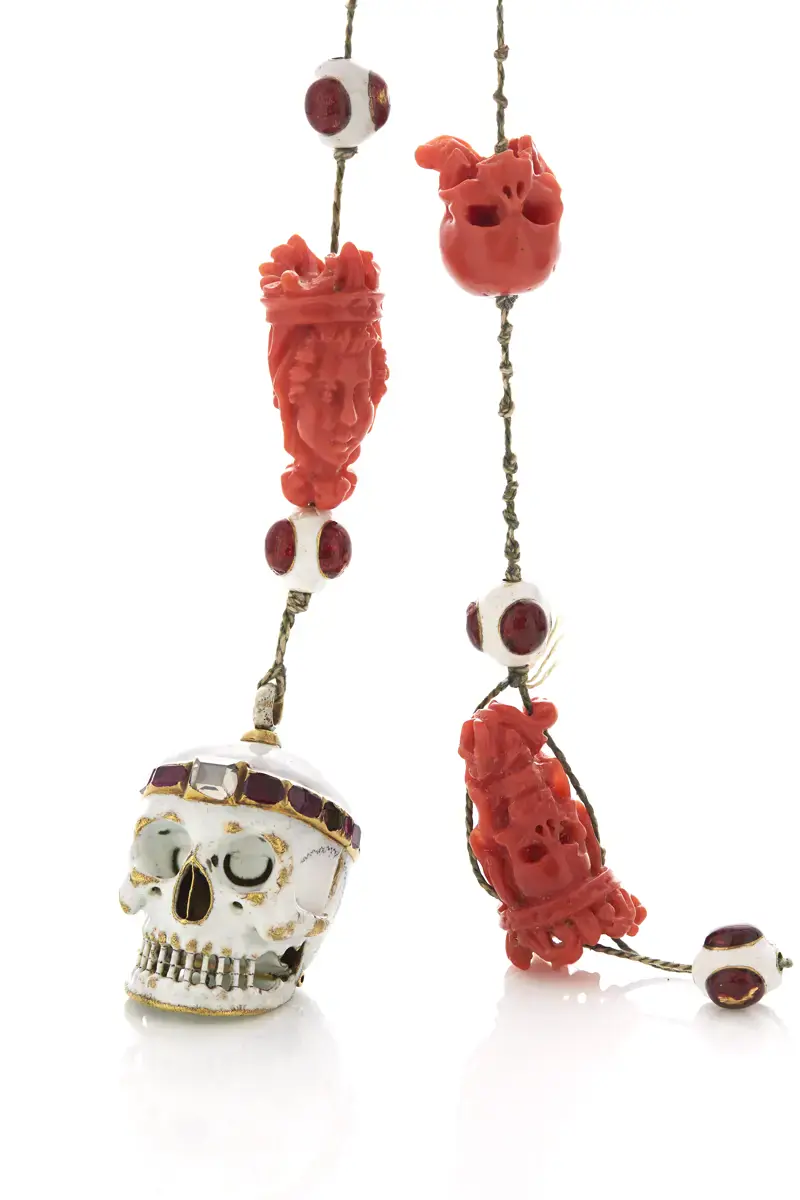
Chain
The pomander was worn on a chain hanging from the wearer's belt.
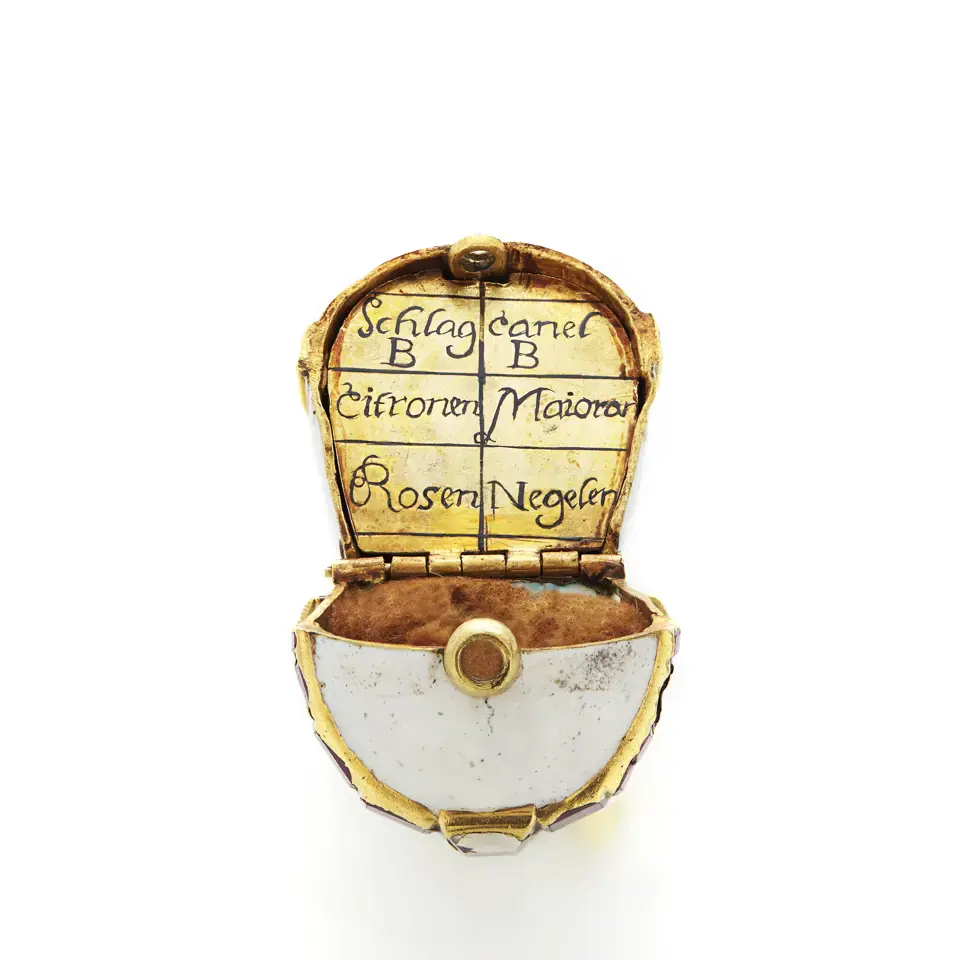
Six small compartments
The skull opens to reveal six small compartments in the back of the head. Each compartment has an inscription describing the contents: smelling salts, cinnamon, lemon, marjoram, rose and clove.
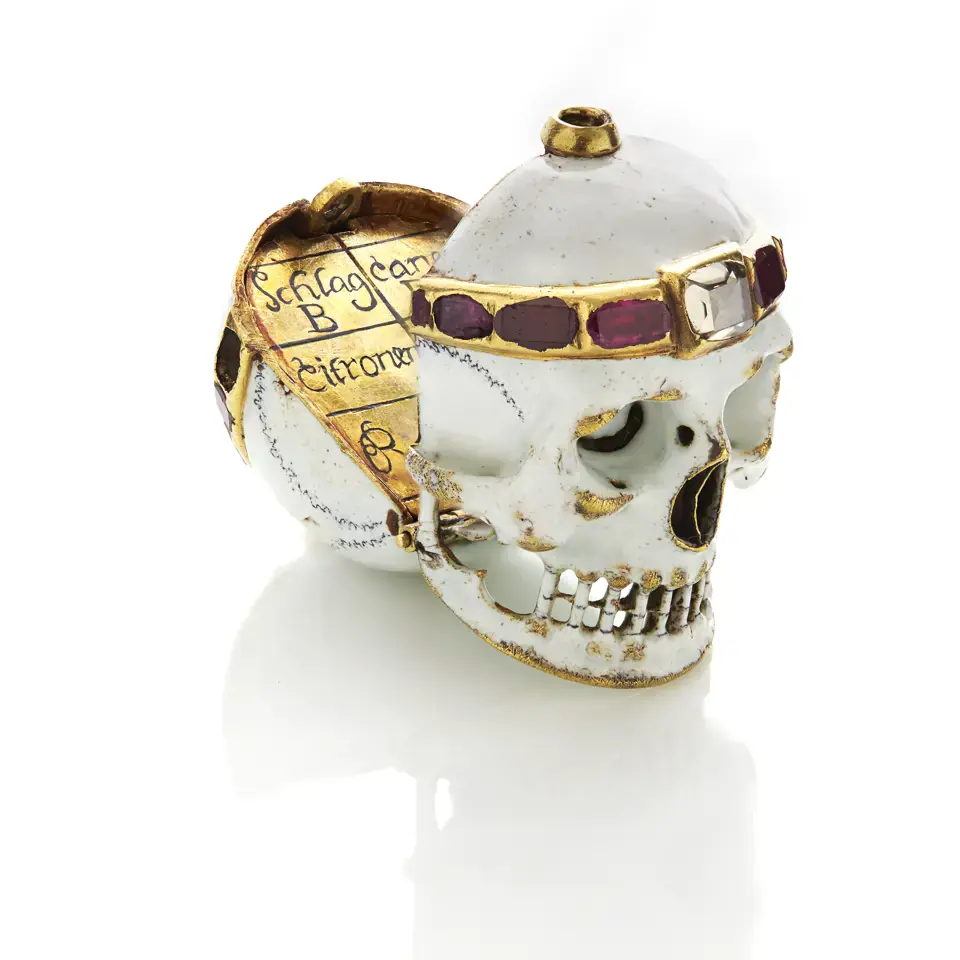
Gold and white enamel
The pomander is made of gold and white enamel with rubies.
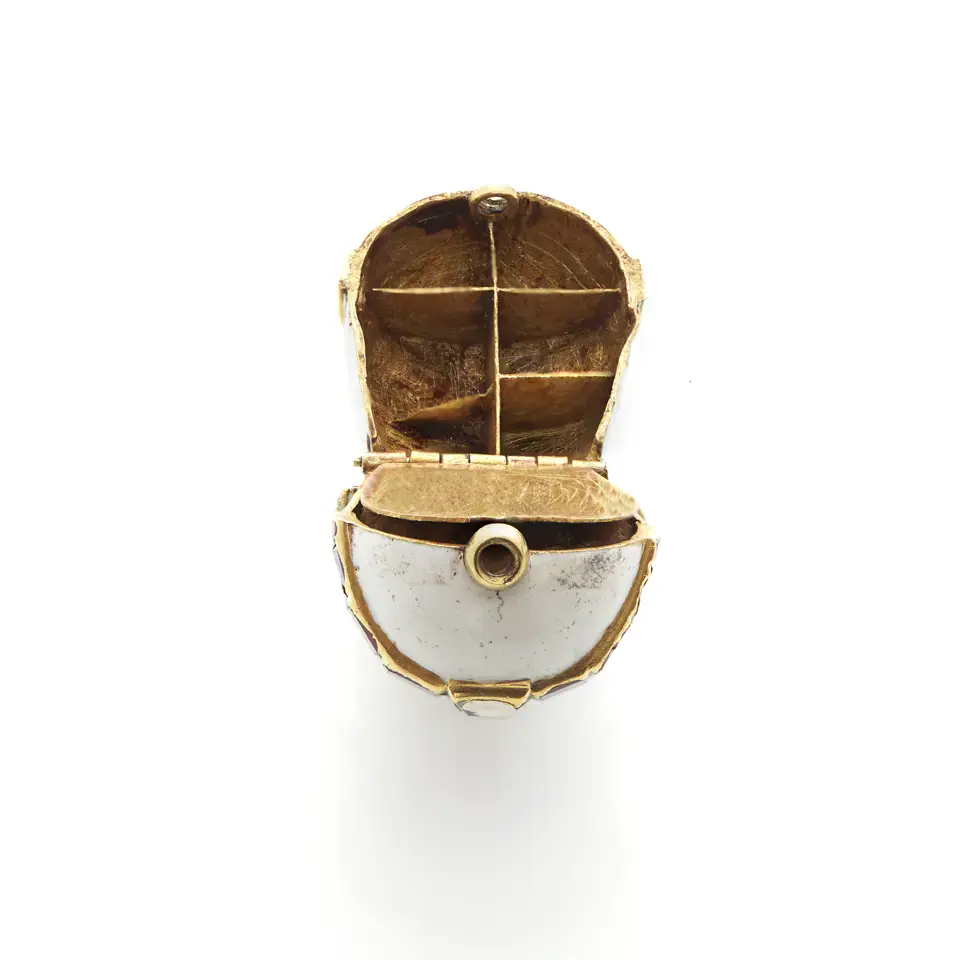
Memento mori
So-called memento mori objects were intended to remind the owner of the transitory nature of life.
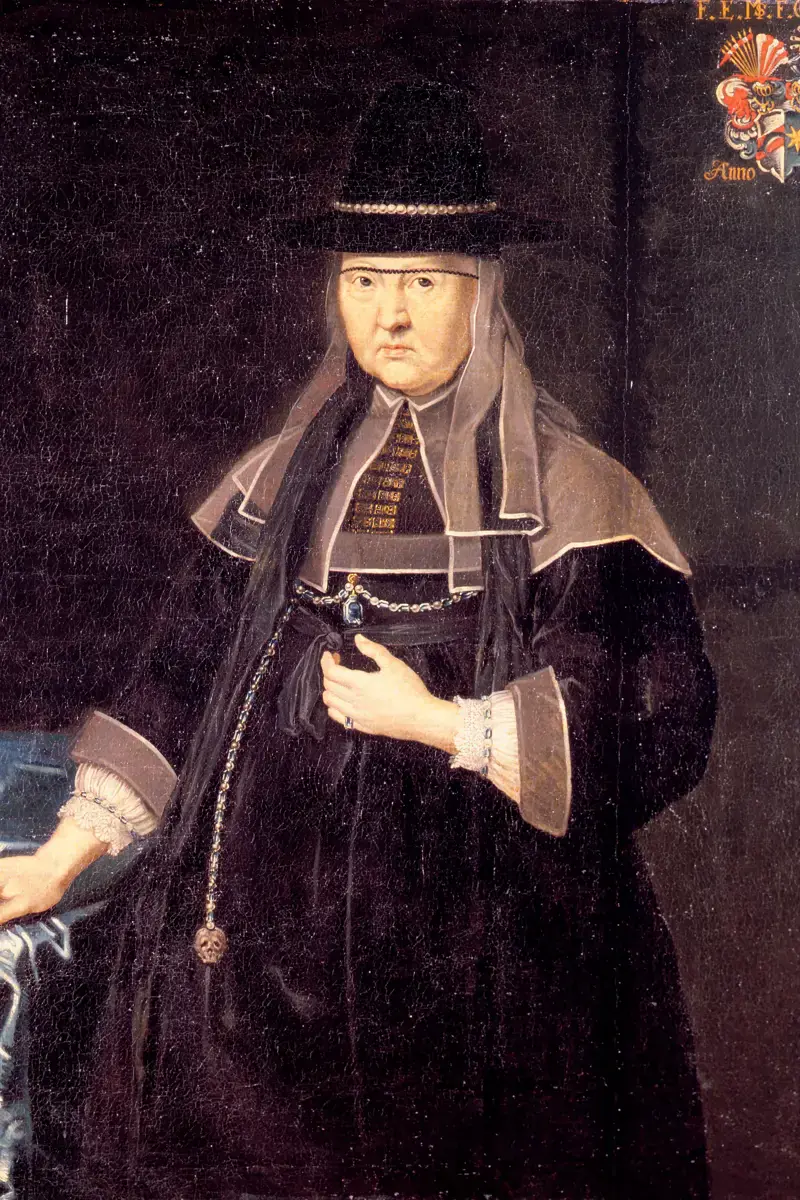
Portrait of Ellen Marsvin
If you look closely at the large portrait of Ellen Marsvin on display at Rosenborg, you will see that Christian IV's mother-in-law wore a similar pomander on a chain.