The King’s wetting trap chair
Humour at the royal court in the 17th century
This chair has a concealed mechanism that traps the person who sits in it and then wets the person’s trousers. It was probably in use at the court of Christian V.
The secrets of the chair: a web of hidden mechanisms
The intricate hidden mechanisms of the chair emit noises and release water to give the impression that the person is peeing, while iron grips prevent the person from getting up.
There are six mechanical chairs in Europe. This one stands out by having three effects. Like at least two of the other chairs, it was probably used for pranks at the royal court.
New upholstery
In 1752, the wetting trap chair was placed in the Royal Cabinet of Curiosities, where The King kept artefacts and natural items that he found fascinating or remarkable.
On this occasion, the chair was reupholstered, as the original upholstery was worn. This suggests that the chair actually saw a fair bit of use. While in the Cabinet of Curiosities, it was reupholstered once more, indicating that its mechanisms had been demonstrated. The chair may have been at the royal Danish court before 1752, probably during the reign of Christian V, but this is uncertain.
In the early 19th century, the chair was moved to the Royal Art Museum. Later, probably during the 1850s, it was moved to Rosenborg Castle, where it has been ever since.
Popular wetting sports
So-called wetting sports were popular in Italian, French and South German gardens during the 16th and 17th centuries, where visitors were surprised to discover man-made grottoes and hidden waterworks. English travel accounts from the 17th centuries describe how waterworks were used for ‘wetting sports’ at the court. Perhaps the wetting trap chair served a similar purpose.
Wetting sport and wet trousers
- Water is poured into the tank concealed in the chair’s back via an opening at the top. The tank holds about five litres.
- When someone sits down, a bellows in the seat emits a sound just like breaking wind.
- At the same time, a set of iron arms is released as the seat shifts under the person’s weight.
- The water in the tank is probably released by someone pulling at the two rings mounted in the chair back; from the tank, the water flows into the metal container in the chair back, out under the chair and through nozzles in the armrests.
- When the person gets up, in their wet clothes, the bellows emits a final toot.
The King’s ultimate prank chair
Imagine unwittingly breaking wind and feeling your trousers getting wet. Now imagine that you did so in front of The King during a party at the royal court in the 17th century. That is what happened to the guests who sat in the wetting trap chair.
Royal wetting sports
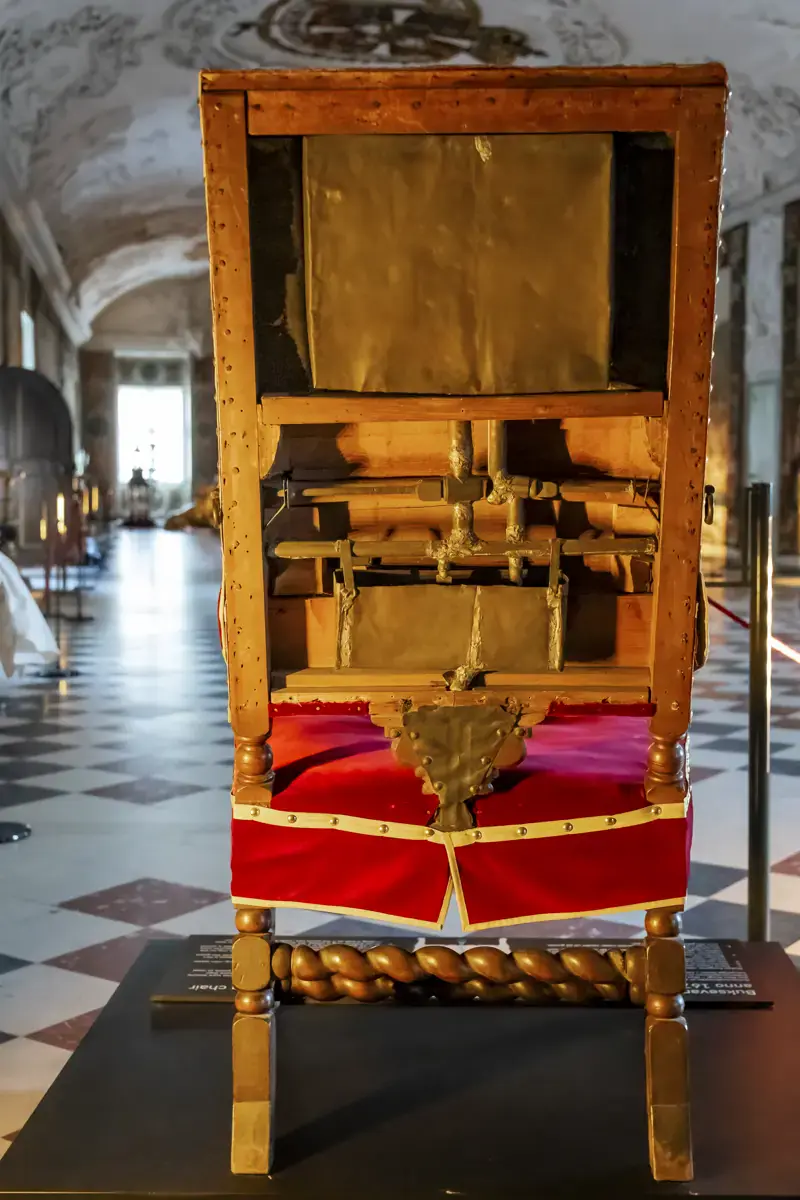
A web of mechanical marvels
The red velvet hides a web of mechanical marvels under the seat and in the backrest, probably intended for pranks and humiliation.
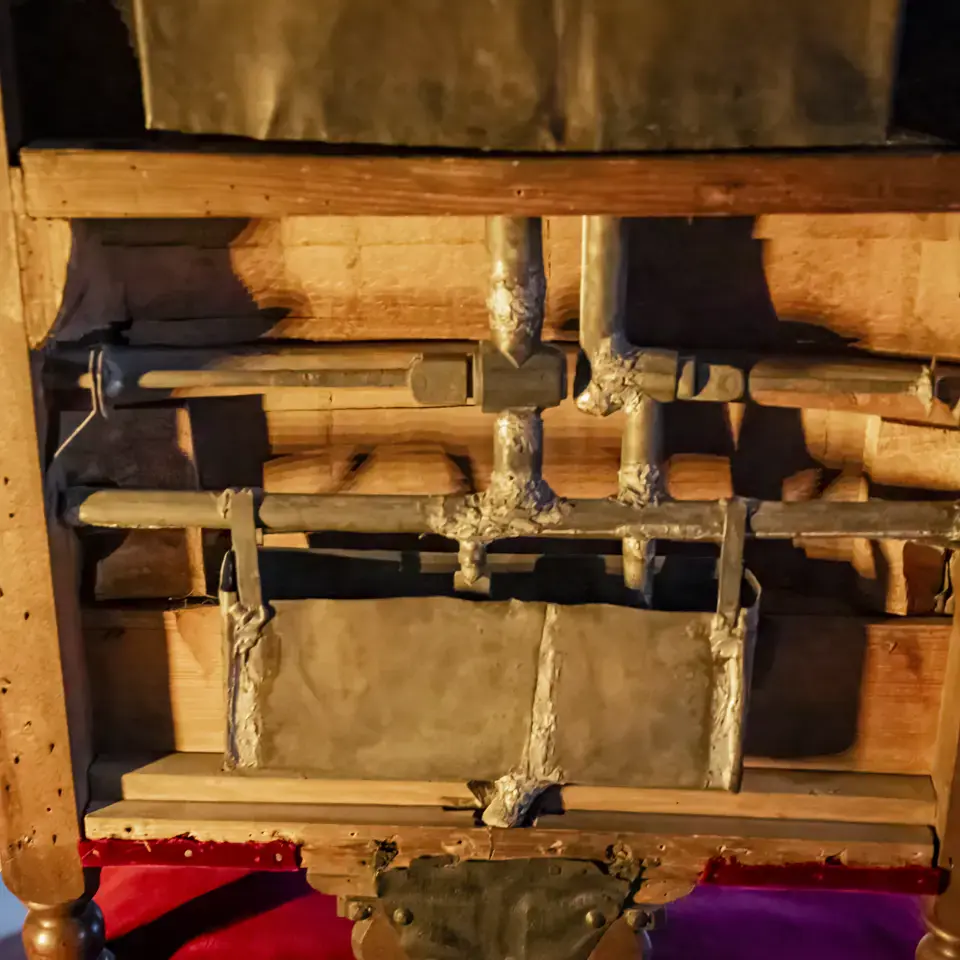
Emits noises and releases water
The intricate hidden mechanisms of the wetting trap chair emit noises and release water to simulate that the person is peeing, while iron arms prevent the person from getting up.
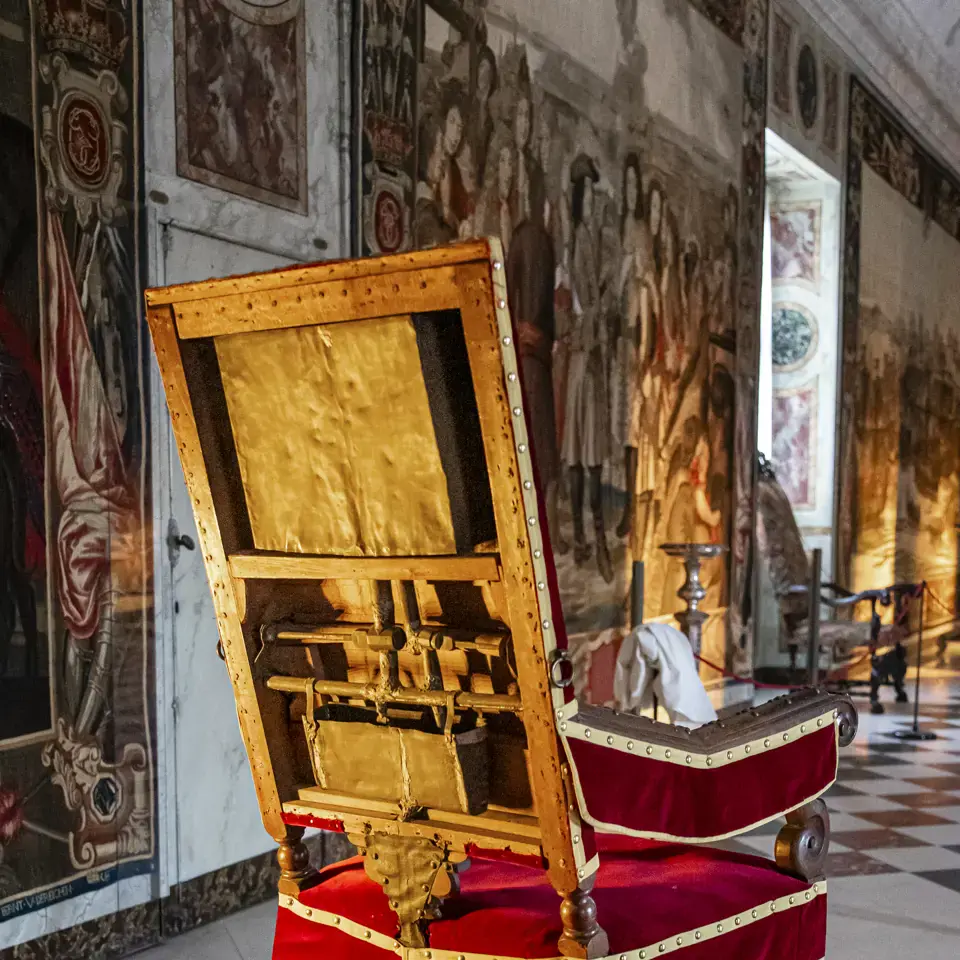
The only chair of its kind that has been preserved
This is the only preserved mechanical chair in Europe with this particular combination of hidden mechanisms.
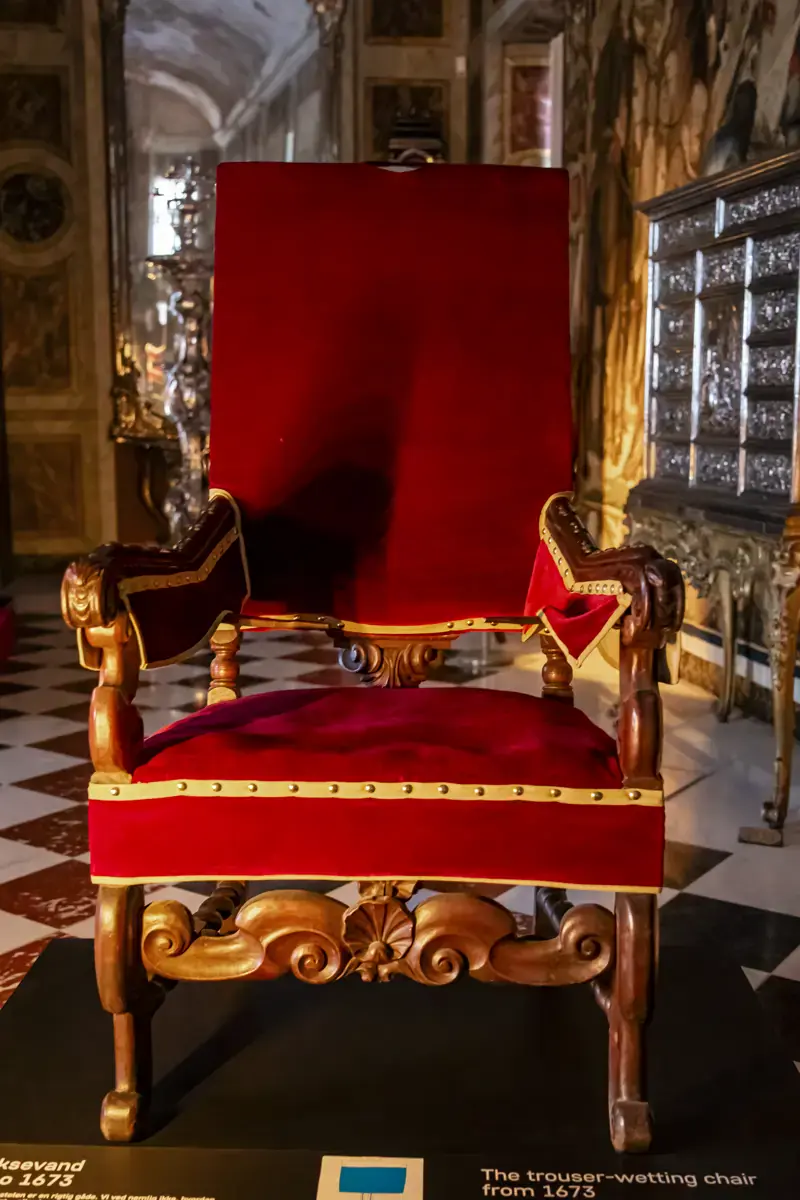
Used for pranks
Trap furniture, like this chair, was used for pranks at princely or noble courts in Europe.
Royal mechanical power tool
The whimsical mechanisms in the wetting trap chair are one of the royal treasures at Rosenborg Castle. Along with other mechanical marvels, such as the astronomical clock and Lehmann’s music cabinet, it impresses with its intricate details and surprising features.