The Royal Kitchen
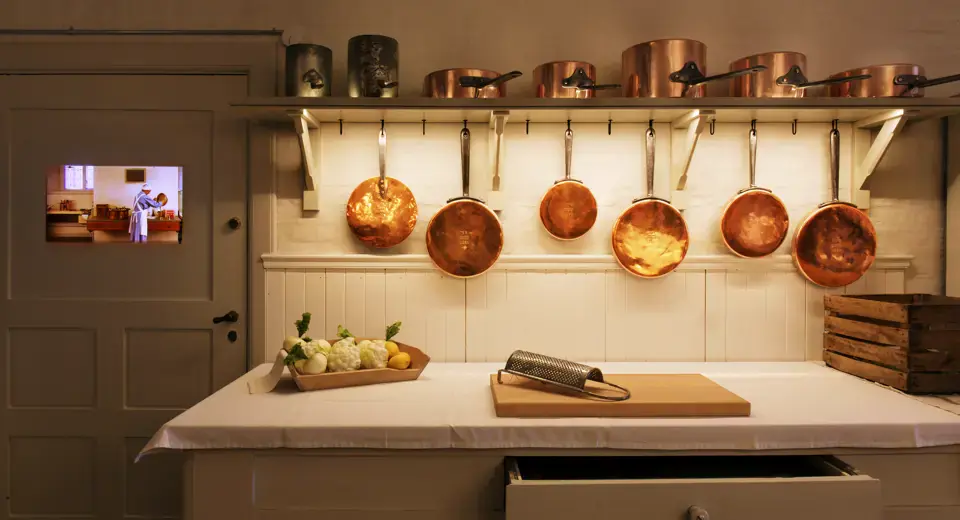
In the Royal Kitchen, you can travel back in time to Christian X’s jubilee and see the gleaming collection of copper cookware.

Travel back in time in the Royal Kitchen
Pots and pans are sizzling and bubbling, and the aroma of roasting tenderloin and chicken tickles your nose in a sensory bombardment of historical gastronomy with elaborate pastries and beautiful flower decorations.
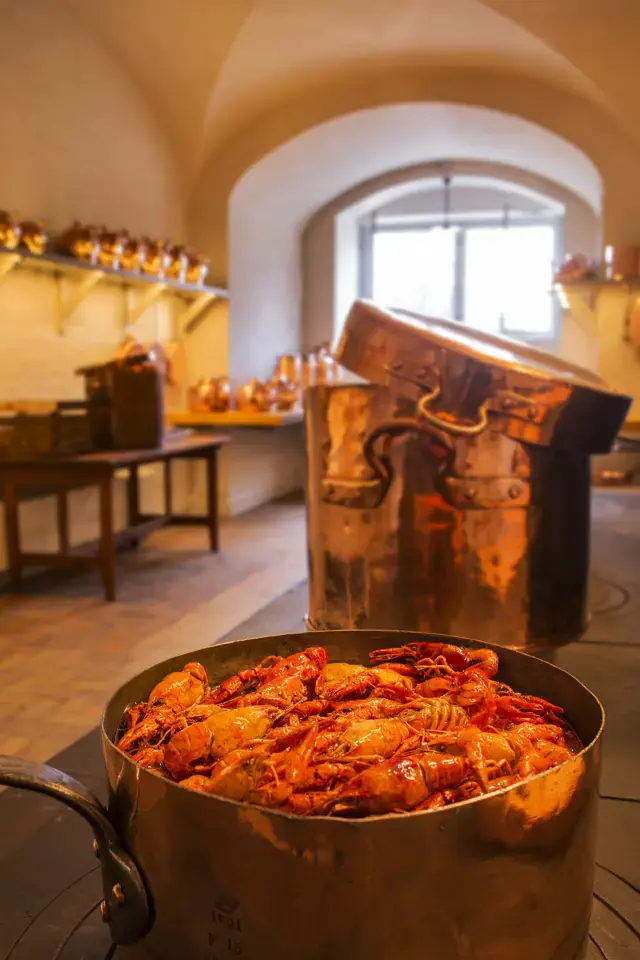
The Royal Kitchen at Christiansborg Palace is gleaming with one of Europe’s biggest collections of copper cookware. Visitors to the kitchen travel back in time to 15 May 1937.
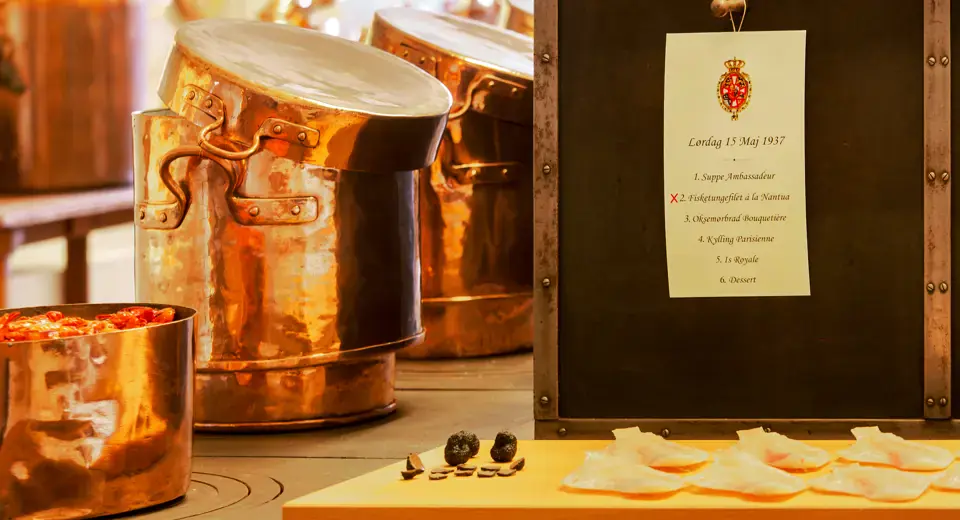
On that day, the kitchen was at a boiling point, busy with the preparations for the gala dinner for Christian X’s silver jubilee, the largest royal banquet in 90 years, with 275 guests.
Pots and pans are sizzling and bubbling in the historic kitchen. Step back in time to a special day in 1937.
The first room in the Royal Kitchen takes you right back to the preparations for a very special night at the palace: the gala dinner that was held in the Great Hall in celebration of Christian X’s 25th jubilee on 15 May 1937. It almost feels as if the busy chefs and assistants have just stepped away from their stations for a brief moment.
-
Did you know that
this was the largest royal banquet for 90 years?
-
Did you know that
no fewer than 275 guests had been invited for the event?
-
Did you know that
32 of the attendants were royal guests from Denmark, Norway, Sweden, Germany and Greece?
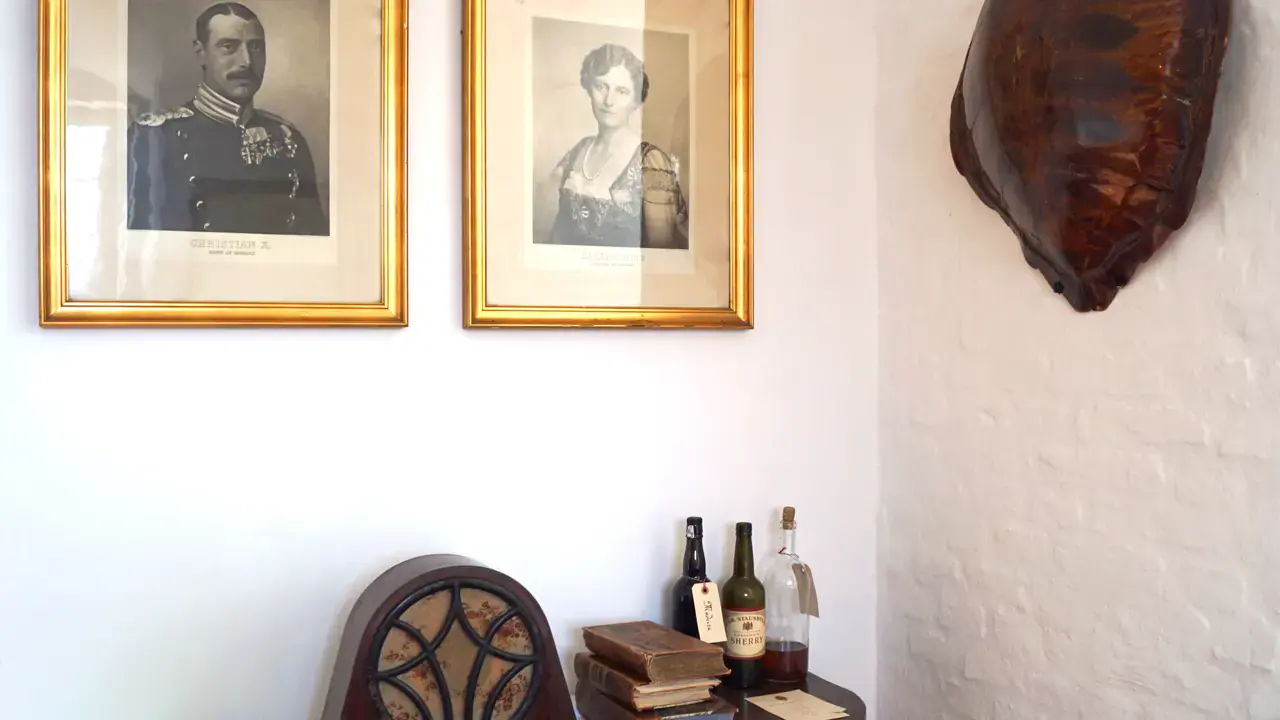
From the old radio, Christian X’s speech is being broadcast into the room. A fresh pot of coffee is waiting for the staff. It is time for a short break.
Heavy and toilsome work
Work in the Royal Kitchen was hard and toilsome, but for many, this was a job for life. For most aspiring cooks, the Royal Kitchen was the most coveted apprenticeship placement in the country.
Occasionally, there was time for a brief coffee break, and in the Royal Chef’s Office, you can have a rare glimpse behind the scenes.
The chef’s working day
The coffee is ready, and the radio is transmitting from Christian X’s jubilee celebrations, with music from the gala dinner, Prime Minister Stauning’s speech to The King and The King’s own speech.
On the desk and on the noticeboard behind it, you can see the many plans for the events of the evening and take a peek at the different lists that the chef had to manage.
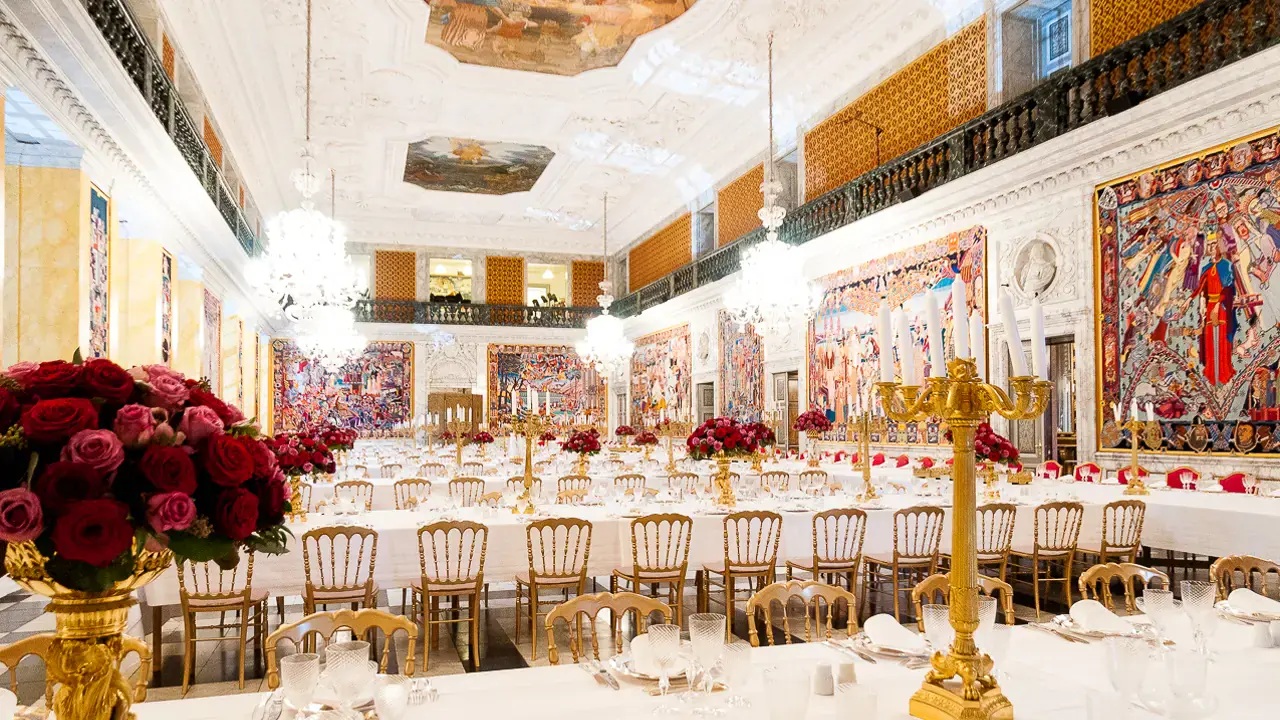
In the Flower Room, the florists create elegant table decorations for the large gala dinners at Christiansborg Palace.
The purpose of the Flower Room
Normally, they work in the Royal Palace Gardens, including at Fredensborg Castle, but when it is time to create decorations for an event at the Christiansborg Palace, they work in the Flower Room.
The Flower Room also has modern refrigerators, hot cupboards and ovens that are put to use when the staff are preparing for large events.
Gala dinners at Christiansborg Palace
Nowadays, the food for royal events at Christiansborg is typically prepared at Amalienborg. From here, it arrives in the Royal Kitchen at Christiansborg Palace and is taken upstairs by dumbwaiters.
The chef heats and plates up the food in mobile pantries in the Dining Hall next door to the Great Hall, where the gala dinners are held, ensuring that the dishes arrive fresh and hot.
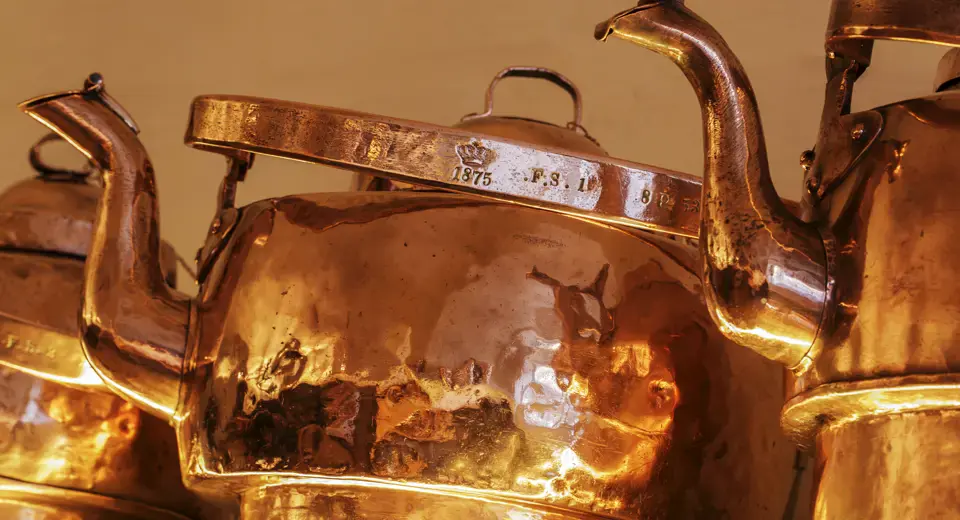
The vaulted-ceiling kitchen is bathed in the glow from one of the largest copper collections in Europe. Therefore the Royal Kitchen is also known as ‘the copper kitchen’.
Christiansborg was originally built as a residence for Christian X and his family. The architect, Thorvald Jørgensen, designed royal apartments with a total of 95 rooms.
In connection with the intended move, the royal household got rid of much of their old copperware and acquire lots of new pieces.
About a third of the 800 items in the Royal Kitchen date from around 1921. The rest are from the 1870s, except for a few that data back to the late 18th or early 19th century.
The oldest item in the collection is an oval stockpot from 1767, during Christian VII’s reign. As the collection stands here, it is one of the largest collections of copperware in Europe, with a total weight of two tons!
The history of the copper cookware
The copper cookware in the Royal Kitchen is no longer in use, as copper kitchenware generally went out of use in the royal household during the 1960s. Some of the items were distributed across other palaces. Traditionally, the copperware followed the royal family as they temporarily moved from one palace to another.
Part of the copperware was therefore kept in storage in a kitchen at Amalienborg, dusty and unused, during the 1970s, 1980s and 1990s. Not until 2000 was all the royal copperware gathered and recorded here, in the Royal Kitchen at Christiansborg.