The Ruins under Christiansborg Palace
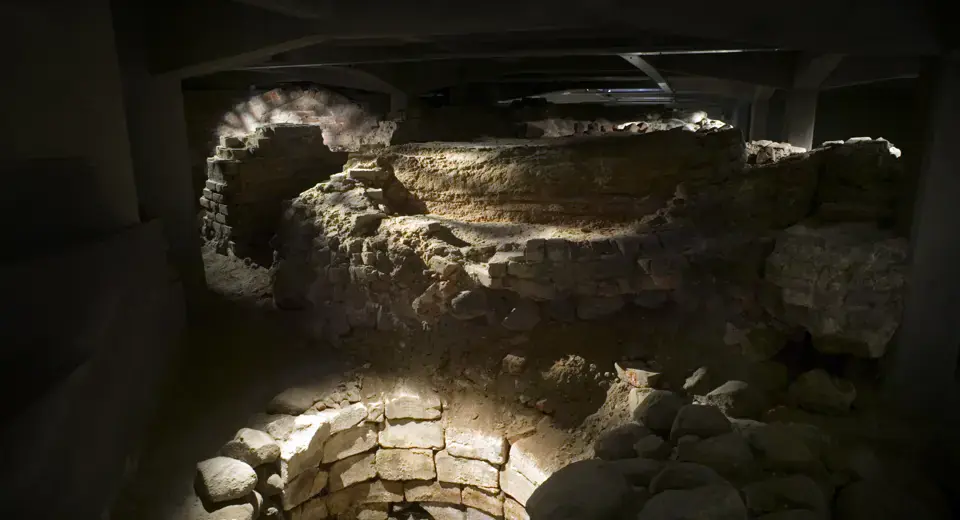
Under Christiansborg Palace, we find proof that Slotsholmen (Castle Islet) has been an important power centre for the past 800 years. Here you can see the ruins of Absalon’s Castle and of Copenhagen Castle.

Visit the dark Ruins under the palace
In the dark basements deep under Christiansborg Palace, you can get close to the history of Copenhagen. Here you can see the remains of Absalon’s Castle and Copenhagen Castle, including the Blue Tower prison. You can also see the founding stone of the current Christiansborg Palace.
Copenhagen was an exposed city, and the castle had to provide effective defence. Absalon’s Castle shielded Copenhagen for two centuries.
Bishop Absalon
When Valdemar the Great became King, in 1157, he installed friends and family members in leading positions in the realm. One of them was Absalon, a close friend of The King since childhood. Absalon, who became Bishop of Roskilde, was given the city of Havn, which was located where Copenhagen is today.
The town itself was not much to speak of, but it had strategic significance, in part because of its good, central location in relation to the extensive trade coming through the Baltic Sea. Trade was a good source of revenue, which made Havn a tempting target for pirates. To defend it, Absalon expanded the fortress on the small islet just off the coast, in between the islands of Amager and Zealand. From here, it was possible to monitor all movements through the Sound.
Built of limestone from Stevns
The ring wall around the castle was made of limestone that had been shipped to Havn from the Cliffs of Stevns in the south of Zealand. This brilliant white wall was visible from afar and undoubtedly made a majestic impression. The ring wall surrounded a square of about 53 metres in diameter. During Absalon’s time, the wall was about five metres tall. It was a so-called core-and-veneer wall with a thickness of 1.5 metres. It has two parallel walls (veneers) made of boulders with a core of lime mortar. The exterior veneer was made of limestone cut into ashlars with half-centimetre joints in between. The interior wall was made of boulders, limestone and field stones and was clearly not intended to look as impressive as the exterior wall.
A defensive fortress
Copenhagen was an exposed city. The castle had to provide an effective defence, but it was run over at least three times: in 1245 by King Eric Ploughpenny, in 1249 by the Lübeckers, and in 1259 by Prince Jaromar of Rugen. The ring wall shows signs of repairs and reinforcements. One important reinforcement was the construction of towers. They enhanced the defence by making it possible to fire at the enemy from multiple angles.
Today, we can see the remains of two towers. In one case, only the foundation remains. The towers were made of large medieval bricks and were built later than the ring wall. This is particularly evident in the other tower, where we see medieval bricks up against the limestone wall. Called the Baker’s Tower, it became part of the later Copenhagen Castle.
Absalon’s Castle shielded Copenhagen for two centuries. In 1368, a war broke out between King Valdemar IV Atterdag of Denmark and his enemies. Several areas of Denmark fell, including the fortress at Copenhagen. The following year, in 1369, a league of Hanseatic market towns decided to have the castle demolished and called in 34 stone masons to make sure it was reduced entirely to rubble.
The Ruins tell the story of Copenhagen Castle
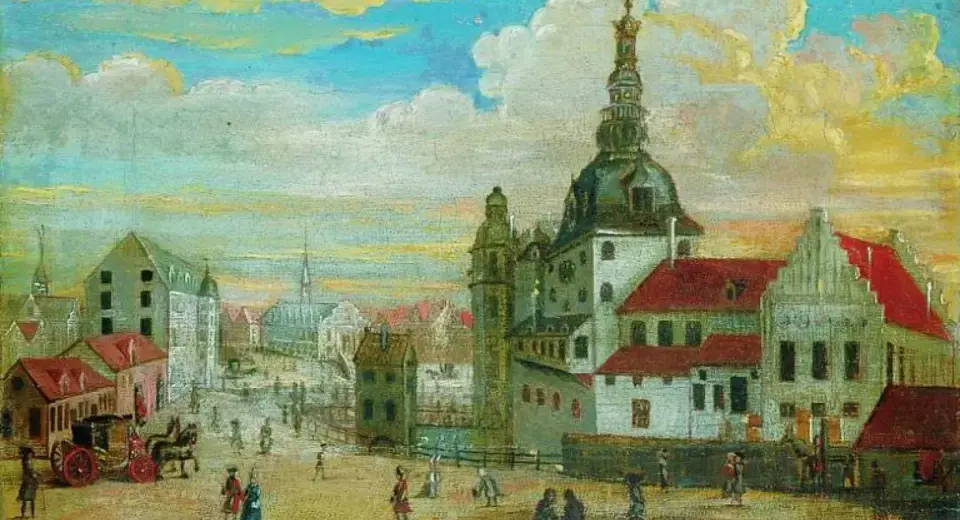
After the destruction of Absalon’s medieval fortress, in 1369, Valdemar IV Atterdag decided to rebuild it in a more palatial style, as Copenhagen Castle. It was built on the remains of the former fortress, which were first covered by a three-metre-thick layer of clay. This meant that the new castle was situated higher than its predecessor, and that there was a slope leading down to the moat that was established. Copenhagen Castle also had a ring wall, delineating a slightly larger area than the one around Absalon’s Castle. After the death of Valdemar IV Atterdag, in 1375, Copenhagen Castle again became the property of the Bishop of Roskilde. Eric of Pomerania took possession of the castle in 1417. Ever since, it has belonged to the Crown, and Copenhagen has been the kingdom’s capital.
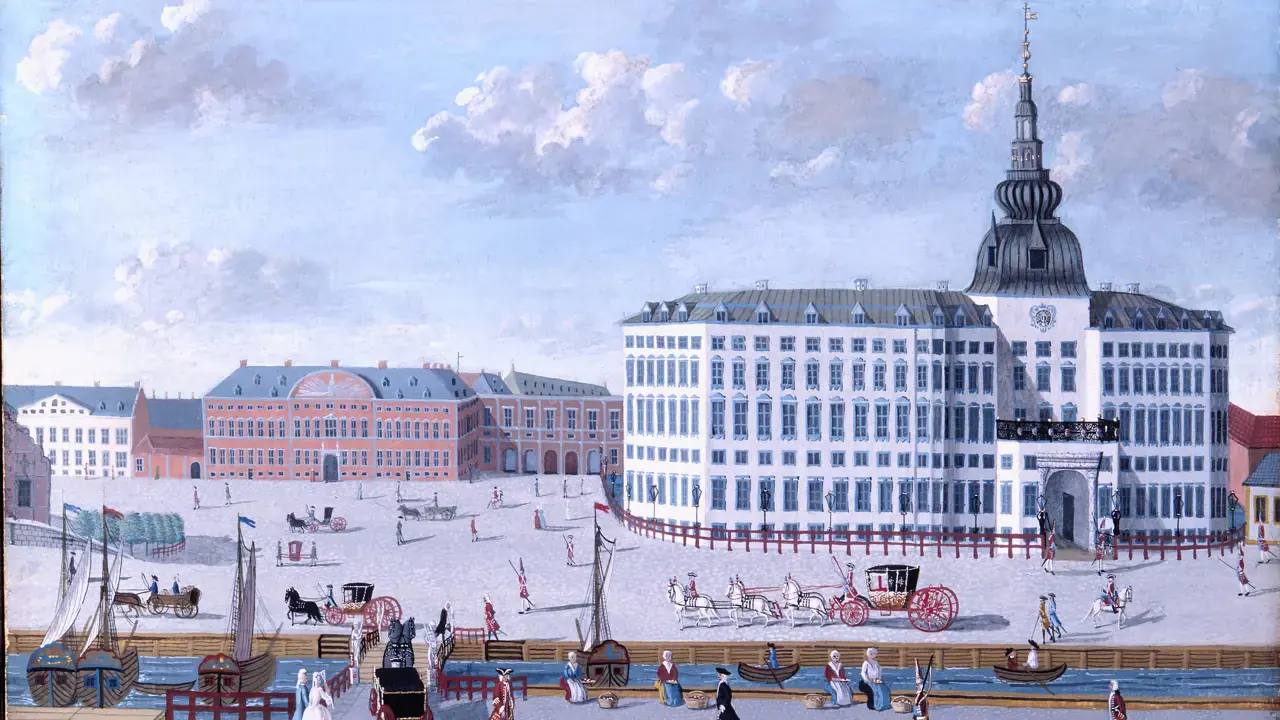
The Blue Tower
Copenhagen Castle included the Blue Tower, a name that spread fear, because the tower was used as a prison. The reason for the name is unknown. Perhaps it had to do with the lead roof, which may have had a blueish sheen. It may also have been a general term for a large tower. The term ‘the blue tower’ is known from other locations, including the Blue Tower at Sønderborg Castle and from places around Europe.
‘The Blue Tower is as smooth as an egg on the inside, so that no human can escape from there by natural means.’
The deepest dungeon of the Blue Tower
The main purpose of the Blue Tower was to serve as a guardroom for the ‘officers of the king’. The Icelandic soldier Jon Olafsson, who in 1620 was sentenced to some time in the deepest dungeon of the Blue Tower, wrote that ‘The Blue Tower is as smooth as an egg on the inside, so that no human can escape from there by natural means.’
A prisoner’s daily life
Olafsson describes that the warder had him hoisted into the dungeon on a thin rope. At the bottom, there was a wooden platform, surrounded by a deep sewage gutter. Olafsson spent a month in the dungeon. Every day, a tub was hoisted down to him, carrying jugs of beer and plates of food.
21 fateful years inside the Blue Tower
Leonora Christina’s memoir
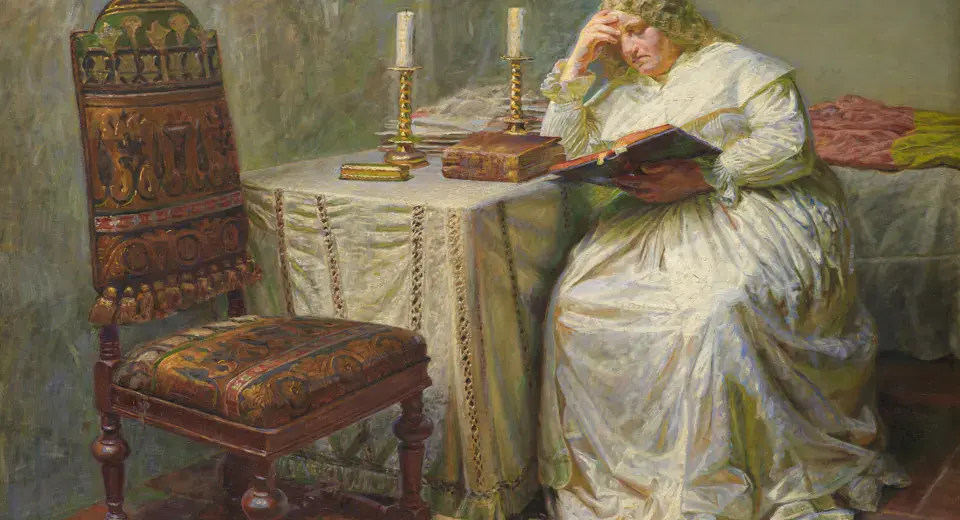
The most famous of all the prisoners in the tower was Christian IV’s daughter Leonora Christina. She was not convicted of any crime but was imprisoned because of the actions of her husband, Corfitz Ulfeldt, who had been sentenced in absentia for high treason. Her prison memoir, Jammersminde (A Memory of Lament), provides detailed descriptions of her time in the tower and the conditions in her small cell, which measured 7 by 6 steps.
The daughter of a king
Leonora Christina’s status as the daughter of a king served both to her advantage and to her disadvantage. She was well treated and received gifts, delicious food and sweets from The King, her half-brother Frederik III. However, due to her poor relationship with Frederik III’s wife, Queen Sophie Amalie, she could not be released. Leonora Christina stayed in prison until after the death of The Queen, in 1685. By then, she had spent 21 years, 9 months and 11 days in the Blue Tower.
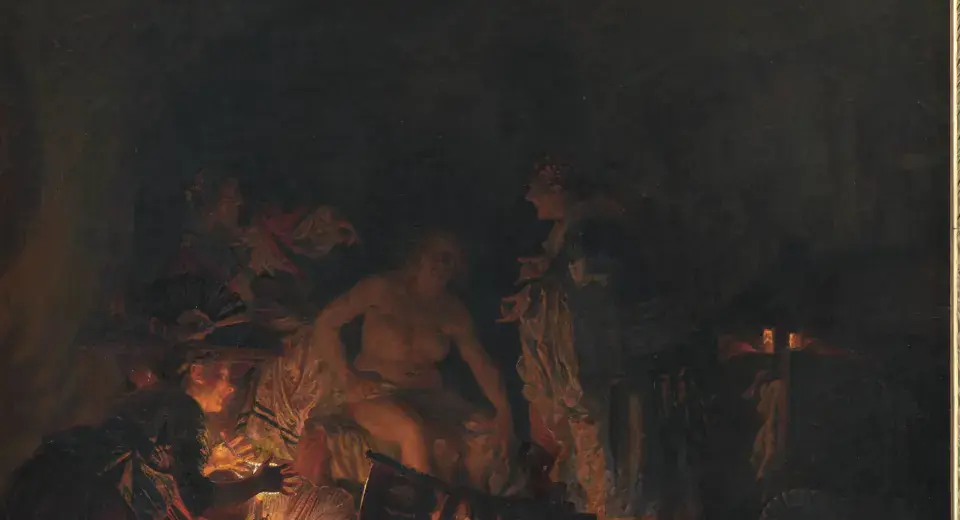
Copenhagen Castle formed the setting of some of the most splendid and lavish parties in Danish history
The grand wedding
One of the most famous parties was the wedding of Christian IV’s son Christian, the Prince-Elect, and Princess Magdalena Sibylla of Saxony, in 1634.
The wedding was a magnificent event with prominent guests in attendance from Denmark and abroad.
Wedding celebrations all over Copenhagen
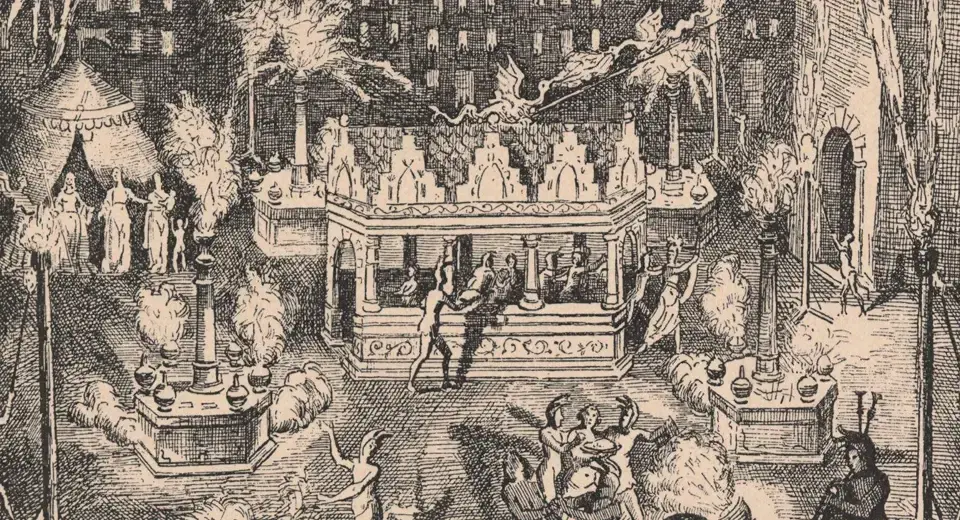
The wedding celebrations lasted several days, and apart from the Court ball and comedic performances, two large fireworks displays were established on Slotsholmen (Castle Islet).
The city squares Amagertorv and Gammel Torv served as arenas for tilting at the ring and jousting.
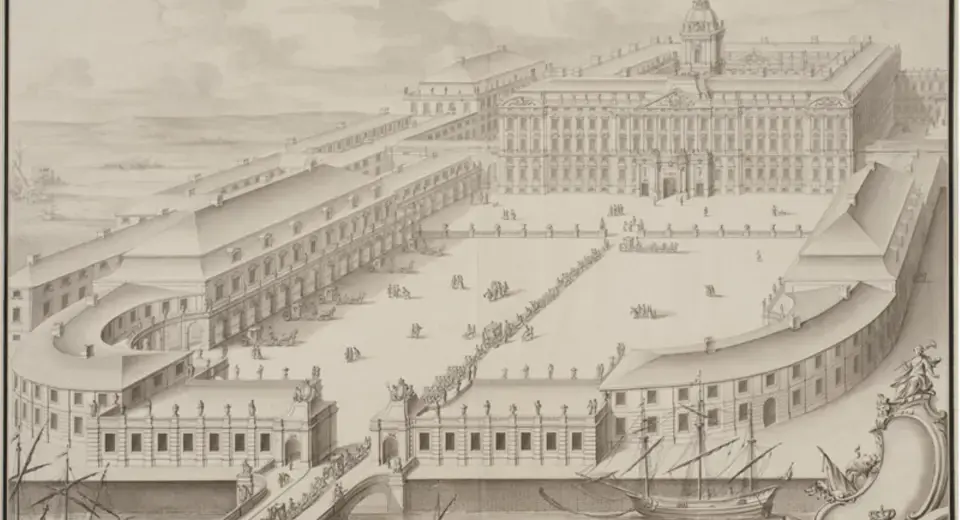
Nearly 350 years after the construction of Valdemar IV Atterdag’s castle, Frederik IV initiated extensive renovations
A demand for symmetry
The castle had long been hopelessly outdated, so Frederik IV initiated comprehensive renovations.
The architectural style of the time was the baroque, which demanded regularity and symmetry. To achieve this, The King demolished large parts of the castle, to rebuild them from scratch.
A risk of collapse
Frederik IV’s renovation resulted in a large and heavy structure. The islet that the castle was built on could not support the extra weight, and in the long term, the castle was in risk of collapse. The walls had begun to slip and crack due to the enormous weight.
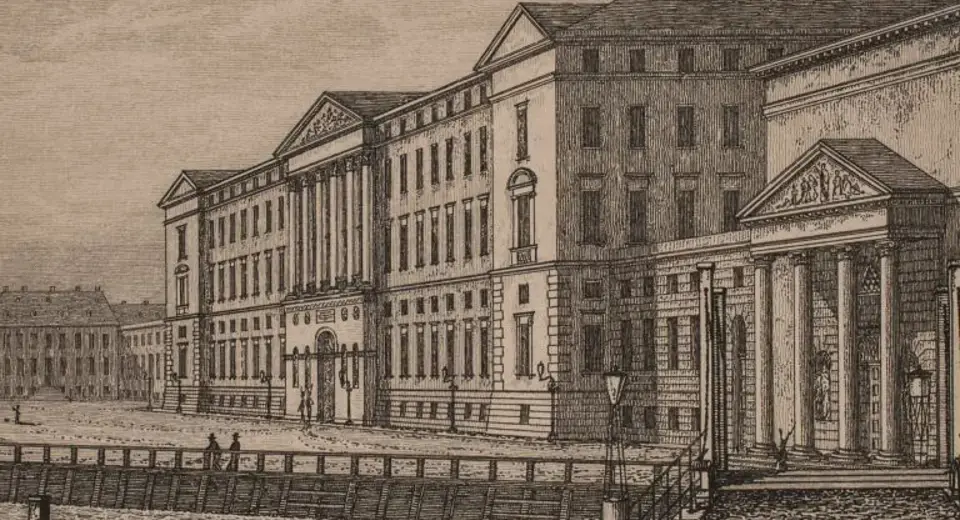
In 1731, Christian VI therefore decided to demolish the castle and start over from scratch. The result was the first Christiansborg Palace, which was completed in 1740.
The story of the many castles on Slotsholmen (Castle Islet)
The foundation stone for Christiansborg Palace is visible in the Foundation Stone Room, deep under the current palace, where the story of the many castles on the islet is presented.
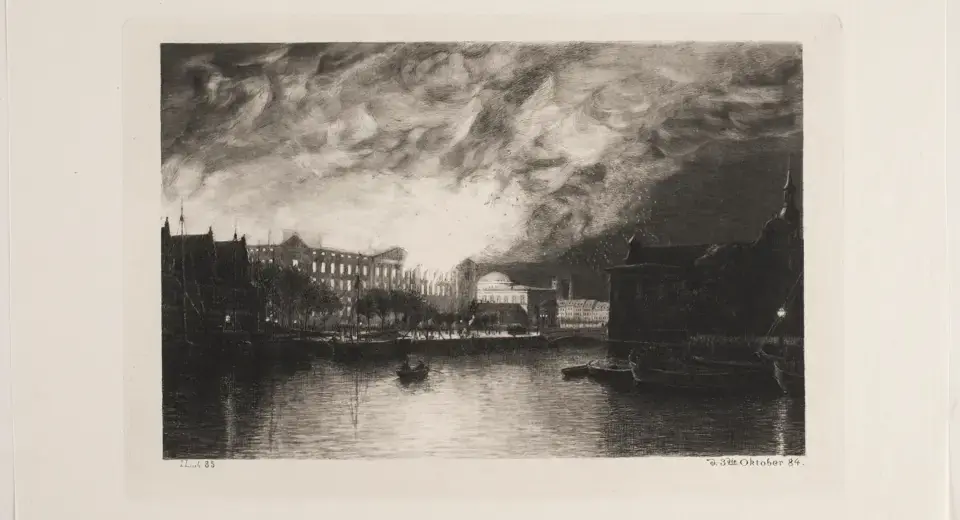
Deep under Christiansborg Palace, we find the old ruins from Absalon’s Castle and Copenhagen Castle. In 1884, the second Christiansborg Palace was destroyed by fire and reduced to rubble. After many years of debate about whether to build a new castle there, in connection with Christian IX’s jubilee in 1903, it was decided to build a third Christiansborg Palace. The foundation stone was laid by Frederik VIII in 1907.
During the interim period, from 1884 to 1907, archaeologists had an excellent opportunity to explore the islet and look for traces of the former castles and events there. These excavations revealed the remains of the infamous Blue Tower.
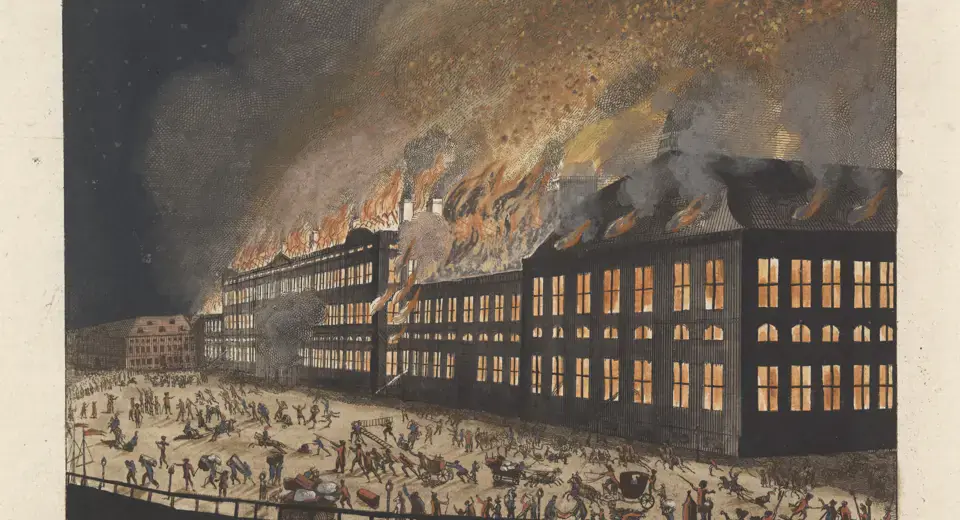
Old ruins emerged out of the dark, moist soil
The discovery of Absalon’s Castle
When Thorvald Jørgensen, the architect of the third Christiansborg Palace, wanted to build a tower, the construction of the foundation revealed even more ruins.
Old ruins emerged out of the dark, moist soil. However, the ruins did not match the outline of Copenhagen Castle. It was only when a white limestone wall was unearthed that the archaeologists realised what they had found: the remains of the castle that Saxo Grammaticus had dated to the year 1167 in his chronicle of Danish history – Absalon’s Castle.
The archaeologists and the people of Copenhagen were thrilled. The idea was raised of placing a cover over the ruins of the historical structures in order to preserve them and make them accessible to posterity.
Preserving the cultural heritage
The idea gained widespread support, and in 1908, the Ministry of Public Works provided the necessary funds to place a cover over the ruins. The purpose was to ensure that visitors could later tour the ruins and to protect the site against the harsh Danish climate.
In 1918, the area around the equestrian statue of Frederik VII on the palace square was undergoing renovation. The archaeologists took this opportunity to conduct additional excavations of the old castles. Apart from the Blue Tower, however, the archaeologists did not make any major discoveries.
A structure was placed over these ruins too, and from 1924, the public had access to the ruins under Christiansborg Palace.