
Countess Danner
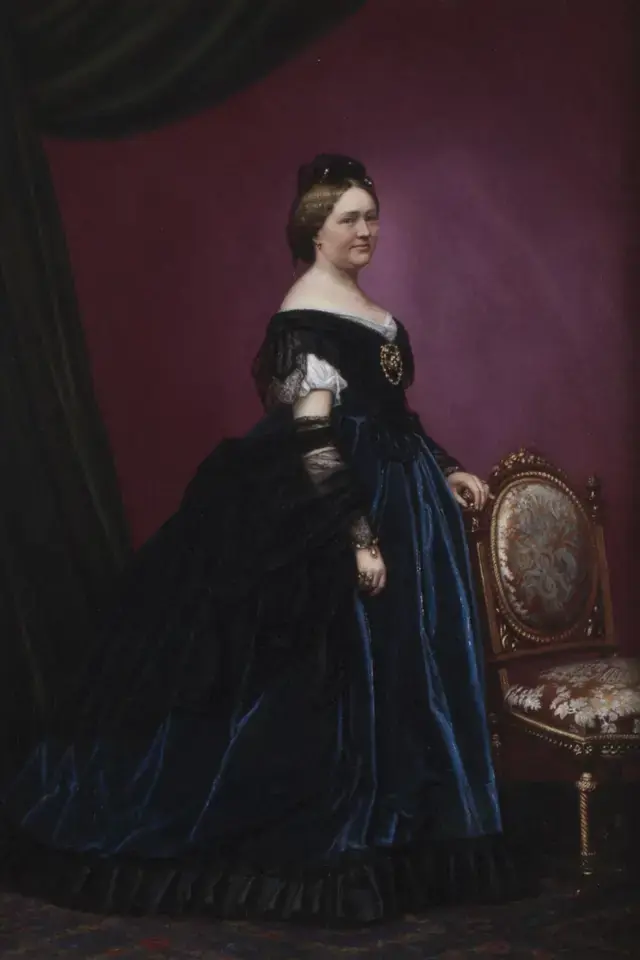
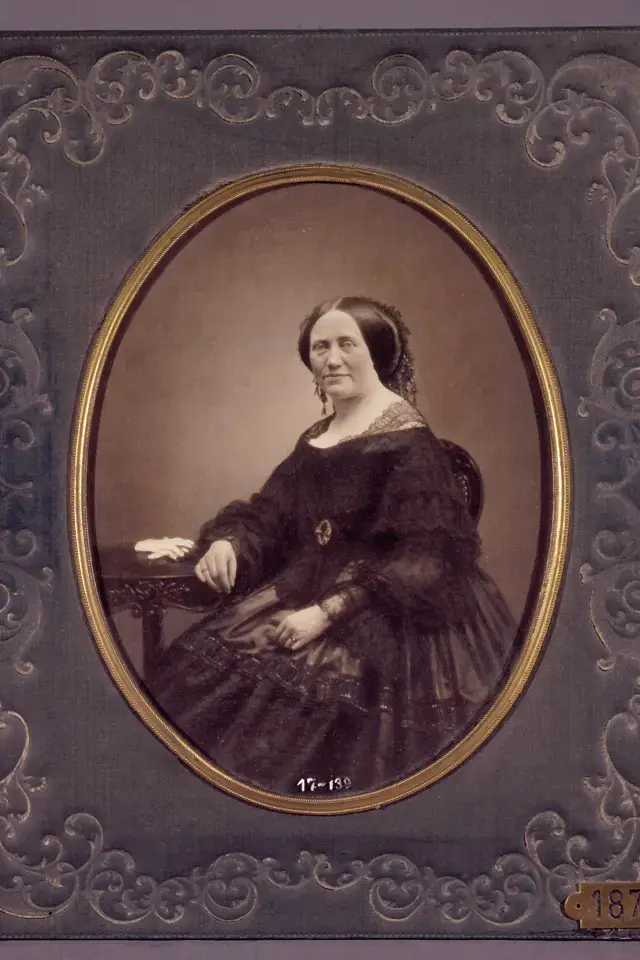
Countess Danner was married to Frederik VI, who was the last of Denmark’s absolute kings, but she never became queen. Instead, she has gone down in history as a leading figure of the women’s movement.
Countess Danner was born in Copenhagen as Louise Christine Rasmussen.
She was born out of wedlock to the domestic servant Juliane Caroline Rasmussen and the unmarried merchant Gotthilf Ludewig Køppen, who was her mother’s employer. Køppen refused to acknowledge Louise as his daughter, so Louise grew up as a so-called illegitimate child.
Ballet dancer
Later, Louise’s mother was employed as a seamstress and dresser at the Royal Danish Theatre, and in 1826 – when Louise was 11, she was accepted into the Royal Danish Theatre’s Ballet School, where she worked her way up to becoming a royal ballerina. At the theatre, she met the printer Carl Berling, in the early 1830s. The two became lovers and life-long friends.
Berling and son
Carl Berling’s family opposed the relationship, so a marriage was not a possibility. In addition to being a theatre performer, which was considered a dubious occupation, as the daughter of a single mother, Louise was simply considered too common.
Nevertheless, on 5 June 1841, Louise Rasmussen gave birth to a son, Frederik Carl Christian Berling, who was sent into foster care. The following year, Louise Rasmussen resigned from her position as a dancer at the Royal Danish Theatre and went to Paris to learn the fashion trade. Back in Copenhagen, she opened a fashion shop on Vimmelskaftet in Copenhagen. The shop attracted great attention, in part because she exhibited a rotating model in the shop window. The Copenhageners had never seen anything like it. However, the shop was not profitable, and Louise soon had to close it.
A complicated trio
During her time at the theatre, Louise Rasmussen had also been introduced to Carl Berling’s good friend Prince Frederik (VII). The three developed a close and life-long relationship.
By all accounts, Frederik was fascinated by Louise’s unconventional personality, and during the 1840s, the two became increasingly close. After his accession to the throne, in 1848, Frederik VII expressed a desire to marry Louise Rasmussen. Initially, the government tried to prevent the marriage, but Frederik VII insisted, and on 7 August 1850, the couple was married at Frederiksborg Castle Chapel. That same day, Louise was named Countess of Danner. Because she was a commoner, their marriage was morganatic, which meant that any children born in the marriage would not be in line to inherit the Danish throne.
Bullied by the upper classes
Countess Danner proved a stabilising factor in Frederik’s sometimes turbulent life. She was a positive influence on Frederik, who struggled with excessive alcohol consumption, among other issues. In fact, Carl Berling and Louise saw it as their shared responsibility to support and advise The King. However, a marriage between The King and a woman of Louise’s background caused consternation, especially at the royal court. The marriage was controversial, and Louise was a political liability for her husband. People even circulated slanderous writings and caricature drawings to mock her.
While the upper classes gave Countess Danner the cold shoulder, she was popular with the common people. In 1854, she and The King bought and settled at Jægerspris Castle. Here, they could relax, far away from the bullies.
Charitable work
After the death of Frederik VII, in 1863, Countess Danner took up travelling, often accompanied by her old friend Carl Berling. She inherited a sizable fortune, which she spent on charitable causes. In 1873, she initiated the founding of King Frederik VII’s Foundation for Poor Working-Class Women. The purpose of the foundation was to support working-class women in need. Today, the building, which was erected on Nansensgade in Copenhagen and completed in 1875, is known as ‘Dannerhuset’: Danner House.
Death and legacy
Countess Danner died in 1874 during a trip to Genova in Italy. She lies buried in the garden at Jægerspris Castle. She left Jægerspris Castle and her fortune to a foundation ‘to the benefit of poor and abandoned girls’. To this day, the foundation still exists and supports single women in need and their education.