
Queen Alexandrine
Modest, creative and the anchor of the family
Alexandrine Auguste of Mecklenburg-Schwerin was borne as the eldest child of Grand Duke Friedrich Franz III and the Russian-born Grand Duchess Anastasia Mikhajlovna.
Alexandrine was raised in a cosmopolitan environment shaped by her mother’s princely background. From childhood, Alexandrine learnt to navigate the international scene in Russia and Mecklenburg and at other princely courts around Europe, and she spoke French, German and English from a young age.
Raised in France and Germany
Unfortunately, Alexandrine’s father was in poor health, so the Grand Duke and Duchess spent long periods in the south of France, where they owned a villa in Cannes, on the French Riviera.
This meant that Alexandrine spent the summers of her childhood and youth in Mecklenburg and the rest of the year in Cannes, which had a rich social scene. In the late 19th century, the pleasant climate made the Southern French Riviera an attractive place for the European elite, who went there for the weather and the social life. Following the English custom, the Grand-Ducal family engaged in outdoor activities, especially golf, as well as yachting in the Mediterranean and the Baltic Sea. Music was also an important part of Alexandrine’s life, and she was an accomplished pianist from a young age. Despite her princely upbringing, Alexandrine remained a very private person who preferred a quiet life, away from the lively social activities and lifestyle that had characterised her childhood and youth.
Alexandrine and the Danish people
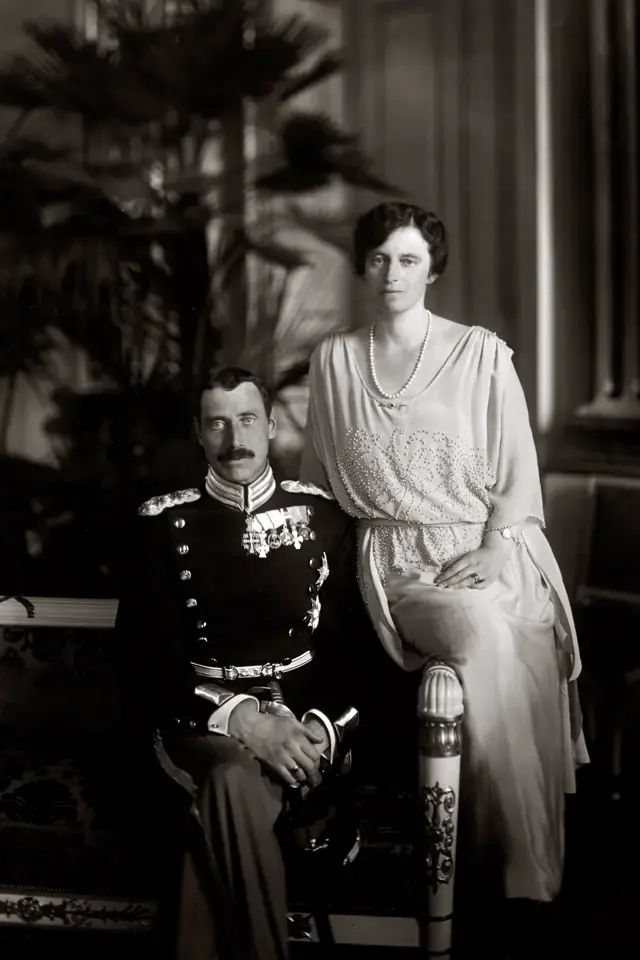
In March 1897, Alexandrine met the Danish Prince Christian (X) in Cannes, and the very next month, the 17-year-old Alexandrine and the 27-year-old Christian were engaged. Shortly after their engagement, Alexandrine’s father died, so he was not there for the couple’s wedding, on 26 April 1898, at Alexandrine’s parents’ villa in Cannes. After the wedding, the couple moved into Sorgenfri Palace in Lyngby, north of Copenhagen, while their future residence, Christian VIII’s Palace at Amalienborg in Copenhagen (the palace that now houses the Amalienborg Museum), underwent much-needed renovation.
The soldier’s counterweight
As early as March 1899, Alexandrine and Christian welcomed their first-born, Prince Frederik (IX), and the following year, Prince Knud was born. In the family home, Alexandrine’s presence was crucial for the sons. She was the one who planned and organised the family’s everyday life, and she was often described as an important counterweight to her husband, who was ‘a soldier at heart’.
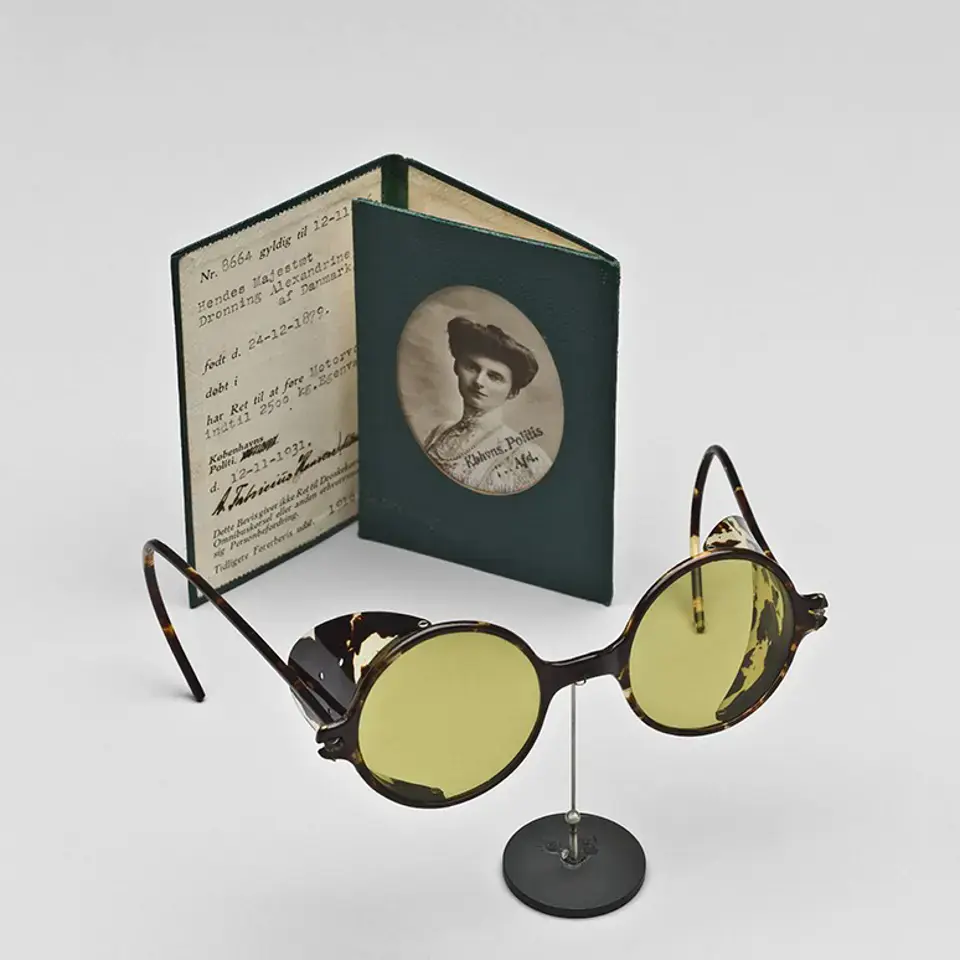
Music remained a crucial part of Alexandrine’s life and thus a regular part of the family’s life. Over time, she passed her interest in music onto her son Frederik (X), who also developed a life-long passion for music. Alexandrine was creative in other ways, too. She engaged in various textile crafts and was a keen photographer, even though she personally disliked being photographed. You can explore many of Queen Alexandrine's private photographs here.
Queen during two world wars
In 1912, Frederik VIII died, making Christian X and Alexandrine Denmark’s new royal couple until the death of the death of Christian X, in 1947. Their reign spanned two world wars. During the Second World War, Denmark was under German occupation, which put the German-born Queen in a difficult position. Nevertheless, Queen Alexandrine became a unifying national figure, at her husband’s side, during the Second World War.
When Christian X died, in 1947, Alexandrine wished to continue to be addressed as Queen – rather than Queen Dowager – and she remained dedicated to her patronages and charity work. Among other initiatives, every year she invited Copenhagen children to spend summer holidays at Marselisborg Palace, which was built as residence for the Royal Couple as a gift from the Danish people.
During Christmas 1952, Alexandrine was once again diagnosed with ileus, intestinal obstruction, and this time, the surgery was unsuccessful. She died on 28 December 1952, aged 73.
Alexandrine is entombed next to her husband in the Glücksborg Chapel at Roskilde Cathedral.